Every aircraft that takes off depends on thousands of components working together without fault. From turbine blades to landing gear brackets, each part must meet exact specifications, often within a few microns. This is why aerospace companies rely so heavily on CNC (Computer Numerical Control) machining. It delivers the accuracy, repeatability, and material versatility that flight-critical parts demand.
What Makes Aerospace Machining Different
Aerospace parts are not ordinary industrial components. They operate under extreme temperatures, high pressure, constant vibration, and heavy loads. A minor flaw in a structural fitting or engine part can lead to costly failures. As a result, the industry follows strict standards such as AS9100 certification, full material traceability, and rigorous inspection protocols.
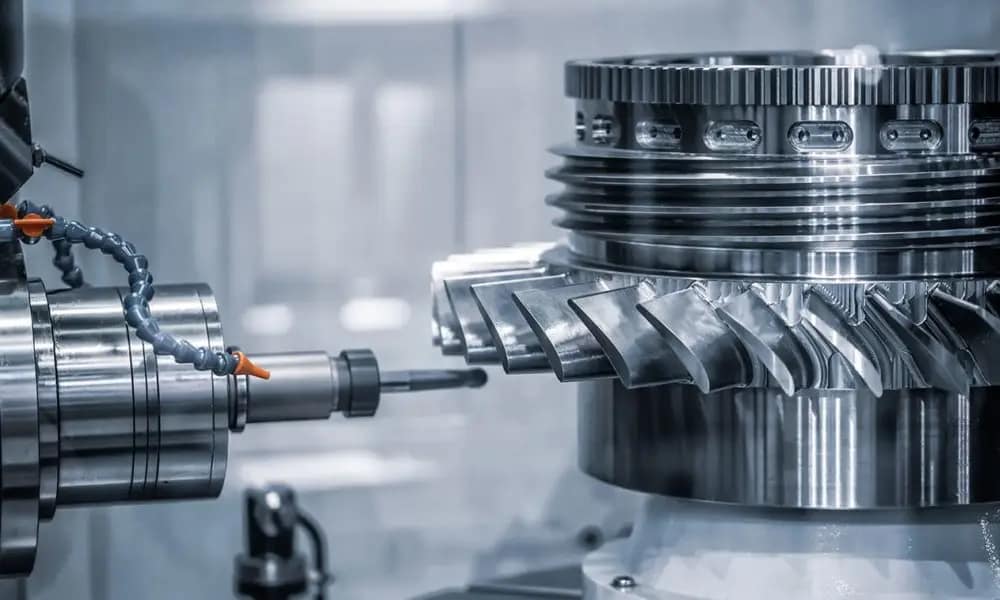
CNC machining meets these requirements by turning digital CAD designs into physical parts with very tight tolerances. Multi-axis machines, especially 5-axis centers, can produce complex geometries in a single setup. This reduces handling errors and improves consistency from the first part to the thousandth.
Materials Used in Aerospace CNC Parts
Choosing the right material is just as important as the machining process. Common aerospace materials include:
- Aluminum alloys (6061, 7075): Lightweight and strong, ideal for airframe structures and housings.
- Titanium (Ti-6Al-4V): Excellent strength-to-weight ratio and corrosion resistance, used in engine and landing gear parts.
- Inconel and nickel superalloys: Withstand extreme heat in turbines and exhaust systems.
- Stainless steel: Durable and reliable for fasteners, fittings, and hydraulic components.
- Engineering plastics (PEEK, Ultem): Used for lightweight interior and insulating parts.
Hard alloys like titanium and Inconel are difficult to cut. They require specialized tooling, controlled cutting speeds, and experienced machinists to avoid heat damage and tool wear.
Key Benefits of CNC Machining for Aerospace
- High precision: Tolerances as tight as ±0.005 mm for critical features.
- Repeatability: Identical parts across large production runs.
- Complex geometry: Multi-axis machining handles curved surfaces and deep pockets.
- Fast prototyping: Engineers can test and refine designs quickly before full production.
- Weight reduction: Precise material removal helps create lighter parts without losing strength.
How to Choose the Right Machining Partner
Selecting a supplier is one of the most important decisions for any aerospace project. The best approach is to work with leading aerospace CNC parts manufacturers who combine advanced equipment with proven quality systems. When evaluating a partner, look for:
- AS9100 or ISO 9001 certification
- In-house inspection tools such as CMMs and optical measuring systems
- Experience with hard-to-machine alloys
- Full documentation, including material certificates and inspection reports
- The ability to scale from prototypes to production volumes
A capable supplier also offers engineering support. Design for manufacturability (DFM) feedback can lower costs, shorten lead times, and improve part performance before cutting even begins.
The Future of Aerospace CNC Machining
The aerospace sector continues to evolve with growing demand for fuel-efficient aircraft, drones, and space exploration vehicles. CNC machining is keeping pace through automation, real-time monitoring, and hybrid manufacturing that combines additive and subtractive methods. These advances allow manufacturers to deliver lighter, stronger, and more reliable parts faster than ever.
Conclusion
Precision CNC machining remains essential to aerospace innovation. Its ability to produce accurate, durable, and complex parts makes it the preferred method for flight-critical components. By partnering with an experienced and certified manufacturer, aerospace companies can ensure safety, compliance, and performance in every part they build.