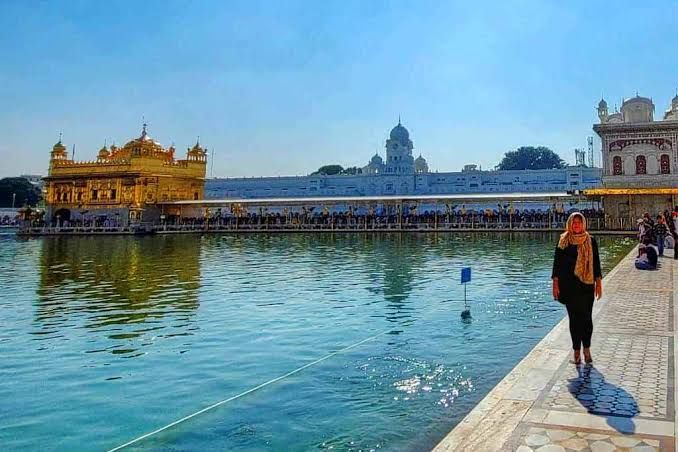
Yes, and it makes for a better trip. The Golden Temple is the centre of Amritsar, but the city has a deeper story that sits just outside its walls. Museums, a fort, older temples and quiet bazaars all show how Punjab has lived through war, Partition and rebuilding. Most of them are within a few kilometres of each other.
The golden temple in Amritsar is the key aspect of this entire plan spread over three days. Although you will get to see it, you will not stand in the queue to enter the premises. Dress simply, wear comfortable shoes, and begin your day early in the morning during summers.
Amritsar day one around Town Hall
Your first visit will be to the Partition museum, located in the old town hall near Hall bazaar. It began its operations in 2017 and gives information about the events that happened in 1947 through personal stories, photographs, and objects of that period. The opening time is from 10 am to 6 pm, and it is closed on Mondays. Therefore, do check the time of your visit.
Walk from there along Heritage Street, a pedestrian stretch lined with old buildings and sculptures that lead toward the temple complex. The lanes on either side are worth a detour for their small shops and old doorways. Jallianwala Bagh is a short walk away. This is a memorial garden for those killed in 1919, and the bullet marked walls inside are hard to forget. Visit in the late afternoon, when the heat eases and the place is calmer.
Amritsar day two at Gobindgarh Fort
Day two moves a few kilometres away to Gobindgarh Fort, which opened to the public in 2017 as a living museum. The fort was built in the 18th century and later strengthened under Maharaja Ranjit Singh, who renamed it after Guru Gobind Singh. Inside, you will find galleries, a museum and daily cultural performances, including Punjabi folk dance. Timings are usually from morning until late evening.
Prepare for a lengthy excursion. This citadel possesses great magnitude, and the shows proceed at prearranged intervals, so be sure to retrieve a schedule upon entry. Make sure to wear comfortable shoes because walking is a necessity, as weekends are crowded there.
Later in the day you can visit the Durgiana temple, dedicated to Goddess Durga and located on a platform surrounded by a holy water pool. It looks pretty much like the Golden Temple. It is popularly known as the Silver Temple because of its grand silver doors. You can have a look at the Lal Devi Mandir nearby, which is usually utterly ignored by tourists.
Amritsar day three at Ram Bagh and Wagah
Visit Ram Bagh in the morning. It is a huge park designed by Maharaja Ranjit Singh in the 19th century. The summer palace located there functions as a museum dedicated to the life of Maharaja Ranjit Singh and exhibits arms, paintings, and personal possessions of the ruler. The green areas are great for strolls before the beginning of the hot day.
Afterwards, travel to the Attari Wagah border, around 30 kilometres from the city. The daily flag-lowering ceremony takes place in the evening, and timings change by season. Arrive well before the start, since seating fills quickly and security checks take time. After a day with the Partition Museum behind you, the ceremony feels more layered than a simple show.
Practical notes for Amritsar
Amritsar has a flat terrain, but the old town is jammed with crowds. You can engage a rickshaw or an app transfer or simply walk around because Hall Bazaar, Heritage Street, and Jallianwala Bagh are well connected. The best time to visit Amritsar is winter, from November to February, which is more comfortable than the summer, as those are hot. You should wear a hat when entering the temples, and if shoes should be removed, kindly do so.
If you want to see the Golden Temple, an early morning or late evening visit works well. It does not need to be the anchor of your day.
Hotels in Amritsar for this plan
Location matters when your plan stretches across the city. Hotels in Amritsar near Town Hall and Hall Bazaar put the museums and old lanes within easy walking distance. Properties near the railway station and Mall Road suit people who want better access to the road. In the case of visiting Gobindgarh Fort and Ram Bagh, a place near the centre of the city will make it easy to save time during the second and third day of the trip.
Amritsar beyond one landmark
Amritsar is more than just one landmark. A tour that includes museums, a fort, and old temples helps to reveal the cultural face of Amritsar clearly. Proper planning is required for this type of tour, but it is worth it.