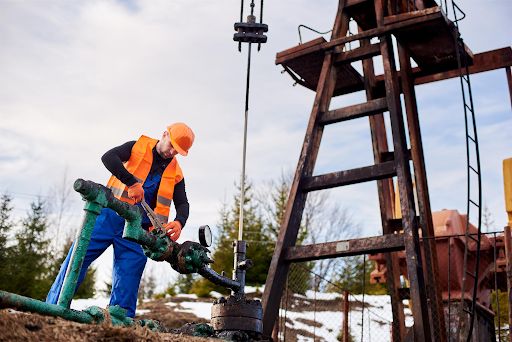
OCTG stands for Oil Country Tubular Goods and refers to pipe-related products used in the production of oil and gas for drilling or operating wells. The American Petroleum Institute (API) has set strict manufacturing standards for these products that must be followed by anyone building them. The terms are set to ensure they can handle extreme pressure and torque smoothly.
In today’s article, we’ll be discussing different types of OCTG. Let’s get started.
OCTG Drill Pipes
Why do people buy OCTG drill pipes? Well, they are basically heavy tubes that rotate the drill bit. They allow the drilling fluid to be pumped through the bit, connecting the surface rig to the drill bit at the bottom.
They usually perform two main jobs. First, they spin the drill bit to cut through rock. They also pump drilling mud down to cool the bit and flush rock chips back up to the surface.
Casing Pipes
Casing pipes line the borehole to prevent the walls from caving in and protect underground freshwater layers. They also act as the structural frame of the well.
The conductor casing is the outermost and largest pipe. It is placed at the very top to stop loose surface soil from falling in. Similarly, the surface casing sits inside the conductor pipe to protect fresh drinking water and stop blowouts. The intermediate casing is set deeper to seal off the rock layers and high-pressure zones.
We finally have liner casing. It’s basically a partial pipe hung inside a casing string. It doesn’t run all the way to the surface, saving money.
Tubing Pipes
These are smaller pipes placed inside the production casing. They serve as the primary conduit for transporting oil and gas from deep underground to surface facilities. And since tubing is not cemented in place, workers can pull it out to repair or replace it if needed.
They have a smaller diameter than casing pipes. In terms of design, they’re segmented in lengths. The threaded connections or couplings are attached at both ends, allowing them to be easily assembled, removed, and maintained.
These pipes are also built from high-strength carbon or alloy steel and manufactured to strict API specifications (as mentioned above).
Things to Keep in Mind before Using OCTG
You must carefully inspect, handle, and verify the pipes to ensure they work safely. For example, you can start by checking the outer surface for corrosion and wear spots. Some pipes and threads also have reject markings, so you must check them.
For pressure testing, you use air and water to see if they can withstand the required downhole pressure. You can also inspect critical parts, such as the octagon plate on drill pipes, to prevent dangerous operational wear. It’s important to match the steel grade and wall thickness to the specific well environment to ensure the pipes don’t rust.
Final Thoughts
Knowing the different types of OCTG in advance will help you choose the most suitable components for your unique projects. The projects will also finish more efficiently.